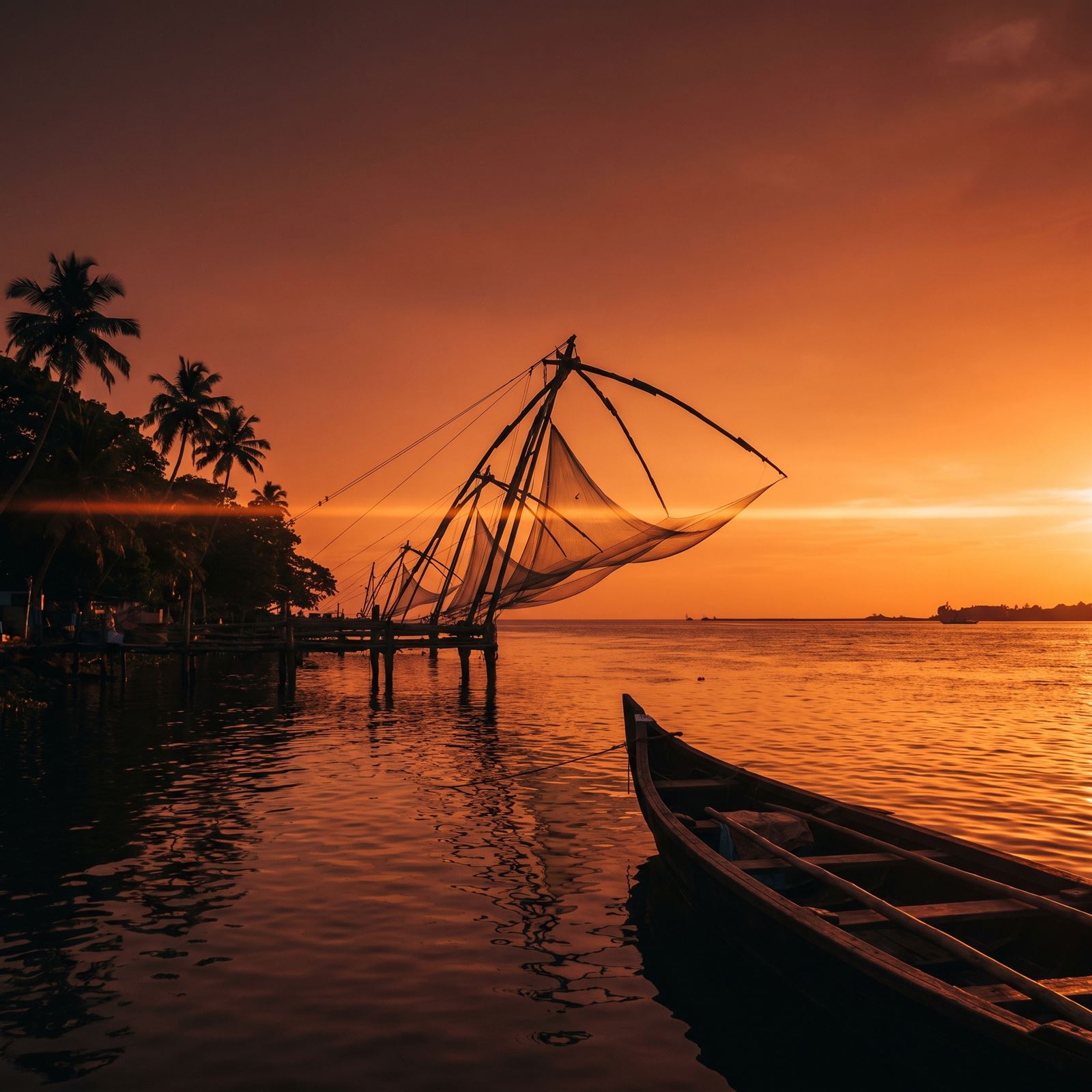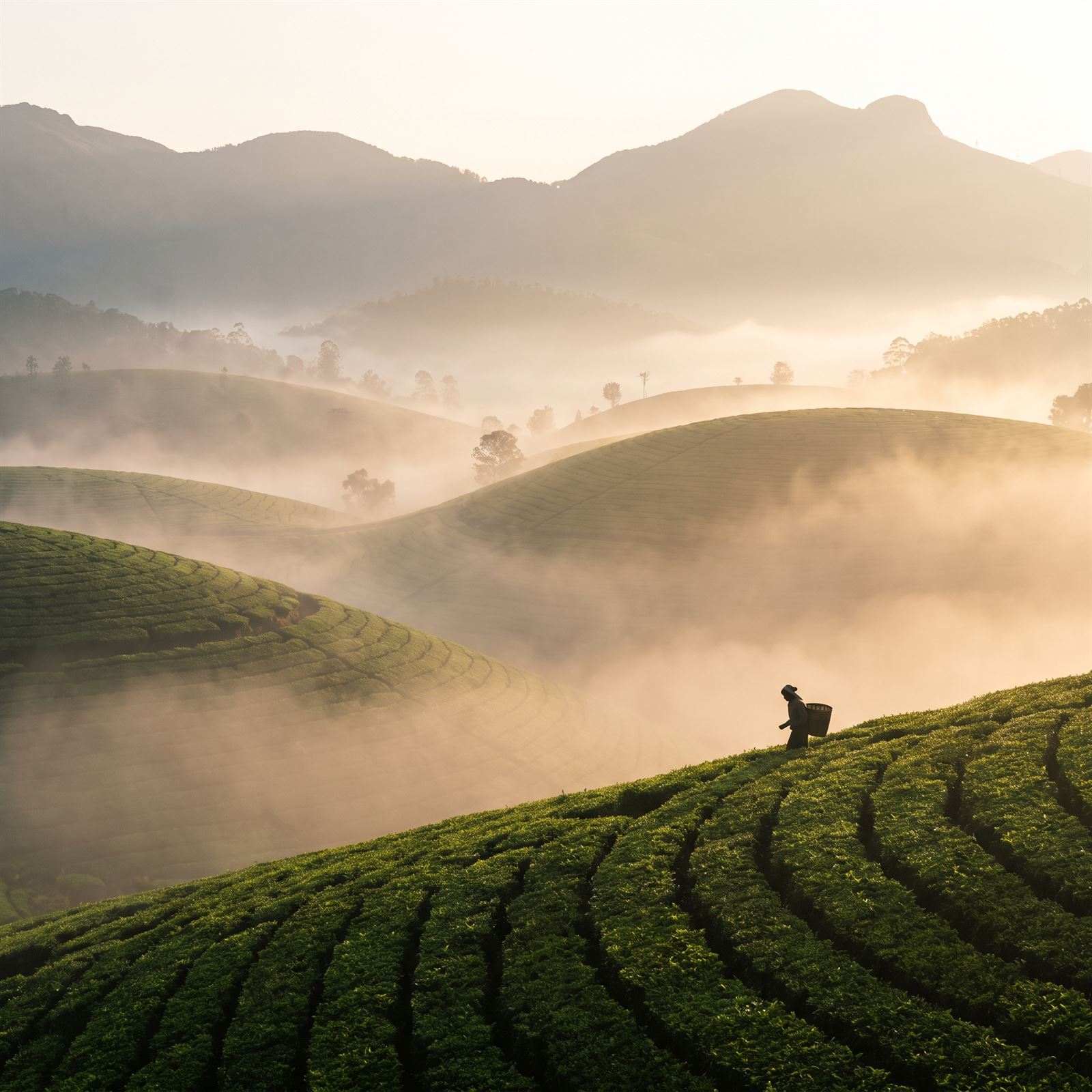

There is a moment, ten minutes out of the Alleppey jetty, when the engine settles into a low murmur, the town slips behind a curtain of coconut palms and the water opens into a sheet of pale silver. Conversation stops. It always does. Kerala’s backwaters have been slowing people down for centuries, and the houseboat — the kettuvallam — is still the finest way to meet them.
Fetraco has been matching travellers to these boats since 2016, from our base at Yendayar in the Kottayam hills — near enough to know the fleets, the crews and the good moorings personally. A decade of it has taught us this: a houseboat night is either the highlight of a Kerala tour or a mild anticlimax, and the difference is rarely luck. It is route, season and boat.
So here is the guide we wish every first-timer could read before booking. For the town itself — the beach, the old pier, the canal-laced quarter — see our full Alappuzha destination guide.
First, what exactly is a kettuvallam?
The name tells you everything: kettu means tied, vallam means boat. These were the rice barges of Kuttanad, their jackwood hulls stitched together with coir rope rather than nails and waterproofed with a black resin of boiled cashew shells. For generations they hauled paddy and coconuts through a landscape that farms below sea level — one of the few places on earth where that happens — until lorries made them redundant.
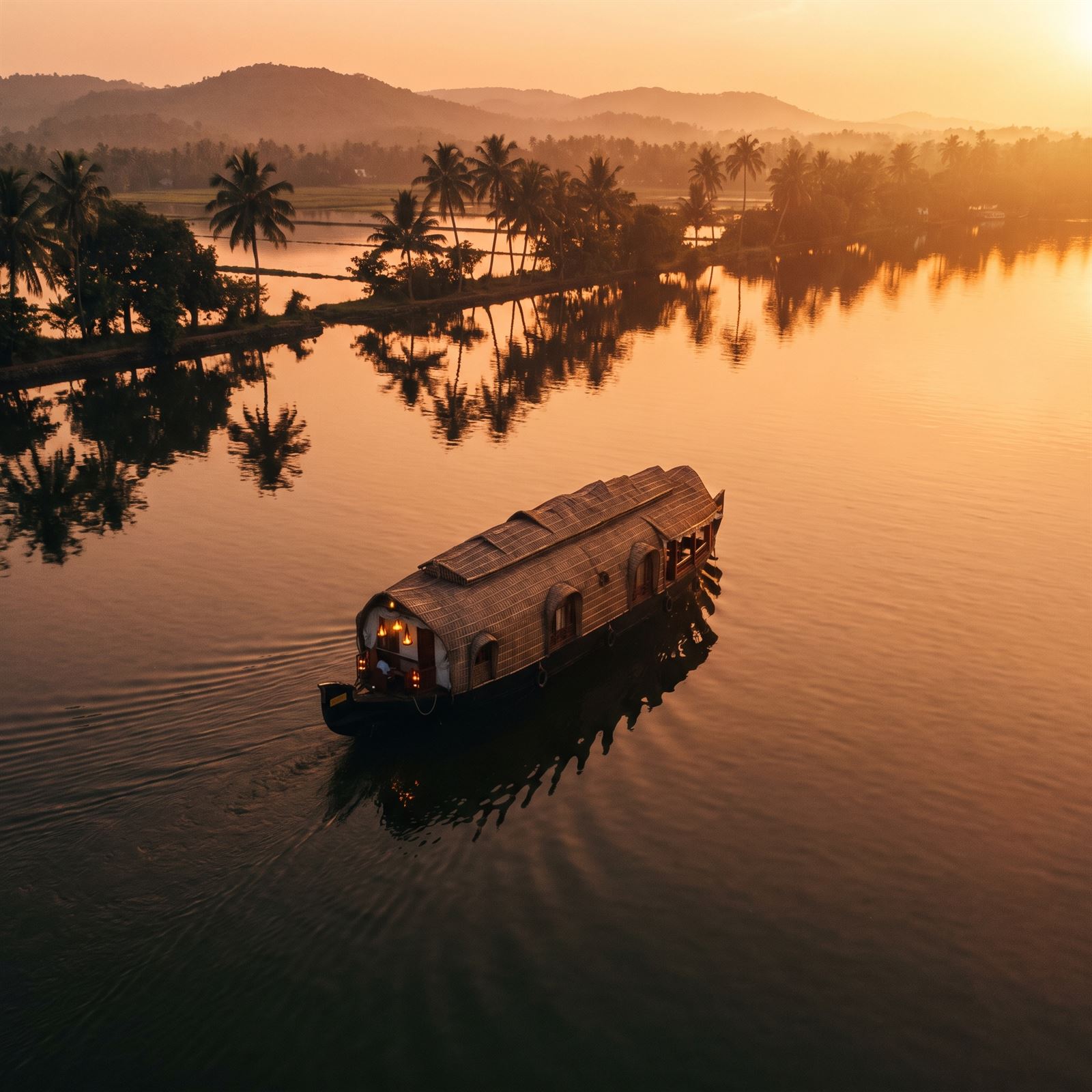
Then somebody had the good sense to put a bedroom on one. Today’s kettuvallams are floating teak-and-thatch suites: an open lounge deck at the bow, one to four en-suite bedrooms amidships, and a galley at the stern where a chef works quiet miracles. A crew of two or three runs the boat and, done well, seems barely to be there at all.
Day cruise or overnight?
The day cruise
A few hours on the water with lunch cooked aboard — the right choice if your itinerary is tight. The water is glassy, so seasickness is rare; but you share the busiest channels at the busiest hours, and you’re ashore before the light turns golden.
The overnight
The real thing. You board around midday, cruise through the afternoon, moor for the evening and disembark the next morning after breakfast. The backwaters save their two finest performances — dusk and dawn — for guests who stay, and day-trippers miss both. If you can spare the night, spare it.
The classic routes
Most Alleppey cruises are variations on two themes, and a good overnight will usually blend them.
Across Vembanad Lake to Kumarakom
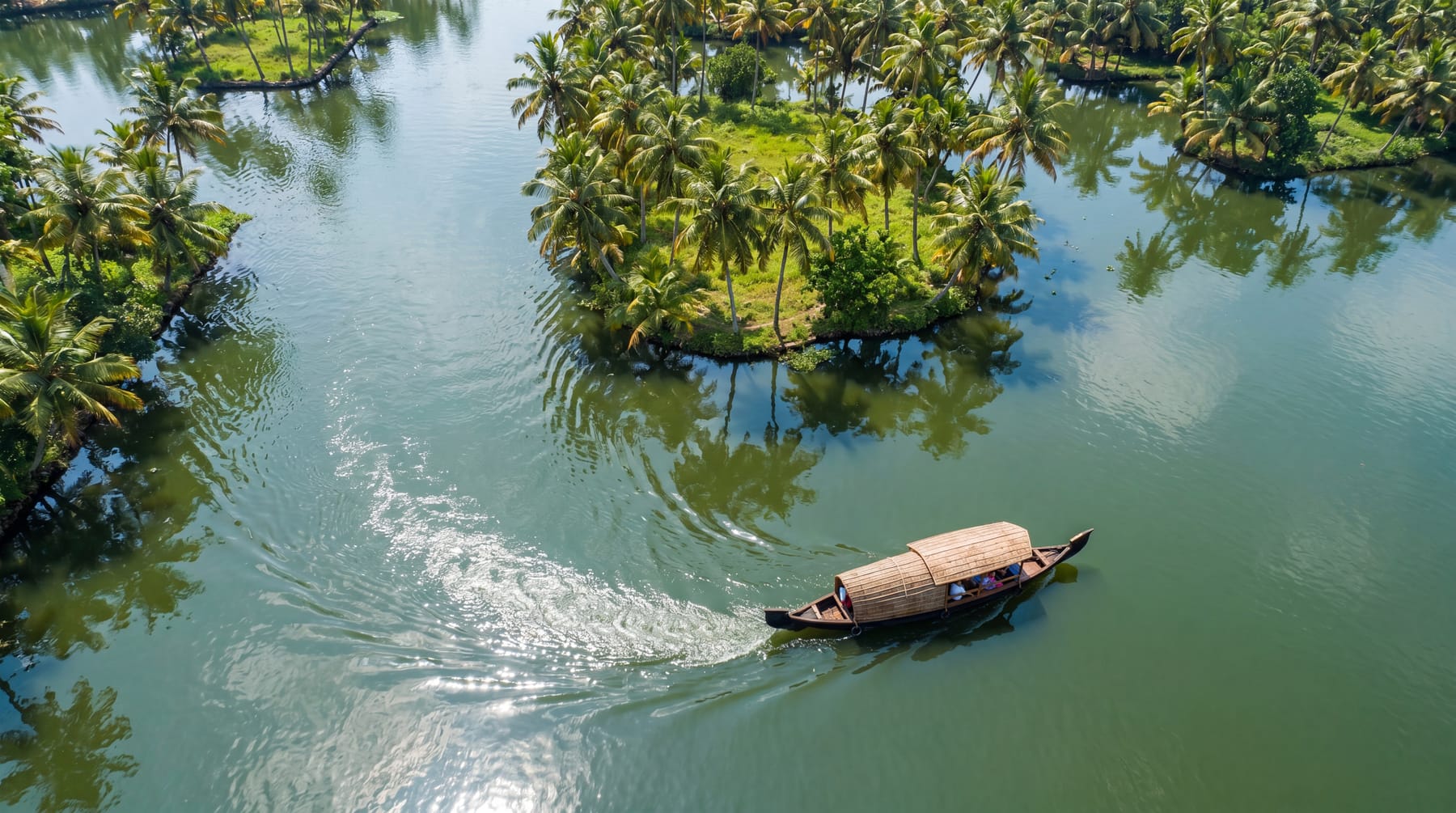
The grand route. The boat noses out of the canals onto Vembanad, Kerala’s largest lake, where the only punctuation on the horizon is a fisherman standing in his canoe. On the far shore lies Kumarakom, all mangroves, birdlife and hush — the quieter counterpoint to Alleppey’s busy waterfront and a favourite mooring for honeymooners.
The village canal loops
The intimate route. South and east of town, the boat threads Kuttanad’s narrower channels past bunded paddy fields lying metres below the waterline, past duck farms, coir yards and white-spired churches. Children paddle home from school; vendors sell fish from canoes. Where the canals pinch too tight for a houseboat, a small open shikara takes over — ask for one as an add-on.
A night aboard, hour by hour
Boarding is around midday: a cool towel, tender-coconut water, lunch already under way in the galley. The afternoon belongs to the open lake and the wide canals — reading, dozing, watching the banks slide past. As the light lowers, every boat begins looking for its mooring; cruising winds down by early evening, as backwater rules require, and you tie up beside a paddy bund or a quiet village bank.
This is when the cruise earns its keep. The engine cuts and the birds take over the soundtrack. The chef gets serious: karimeen — pearl spot fish, fresh from these same waters — with Kerala curries and rice, eaten by lamplight on a deck that has stopped moving but not stopped floating.
The backwaters don’t perform for you; they simply carry on, and that is the entire point.
Set an alarm for dawn: mist on the paddies, kingfishers and cormorants beginning their shifts, fishermen sliding past in silhouette. Breakfast is served as the boat eases back, and you step ashore by mid-morning, noticeably slower-hearted than you arrived.
When to go: a season guide
The cruising season runs roughly October to March, and November to February is the sweet spot — dry, breezy and pleasantly warm, ideal for a day lived on deck. It is also when the fleet is busiest, so the best boats and crews are spoken for first.
The monsoon is a different animal. June and July bring theatrical skies and downpours that can keep you off the deck — atmospheric for some, frustrating for first-timers; our advice is to let the heaviest rain pass. August and September are the connoisseur’s window: the paddies at their greenest, the waterways full, and far fewer boats around you.
One date deserves its own trip. Each August, Punnamada Lake erupts for the Nehru Trophy Boat Race, when chundan vallams — snake boats over 100 feet long, each driven by around a hundred oarsmen chanting vanchipattu boat songs — surge for the finish before roaring crowds. It is one of Kerala’s most electric spectacles.
Fetraco tip: If the Nehru Trophy is on your list, fix your dates early — race week fills the town and the water. Otherwise, late August and September give you the post-monsoon backwaters at their lushest with a fraction of the traffic.
How to choose your boat
Two houseboats can look identical at the jetty and deliver completely different nights. What actually matters:
- The crew. A good chef and a skipper who knows the quiet moorings are worth more than any brochure photograph — you will eat three meals from that galley.
- Private or shared. A whole-boat charter gives you the deck, the route and the timings to yourselves; shared boats sell cabin by cabin. Couples and families should nearly always charter whole.
- AC hours. On many boats the bedroom air-conditioning runs only through the night rather than all day. Fully air-conditioned boats exist — ask which you are getting, especially from March onwards.
- Size and layout. Boats run from cosy one-bedroom craft to multi-bedroom vessels for families. Check the deck — it is where the entire cruise happens.
- Condition and certification. Kerala Tourism grades its houseboats; ask what classification a boat holds and how recently it was refitted.
All of which is why a local operator matters more here than almost anywhere else in Kerala. A houseboat is not a hotel room with a photograph you can trust; it is a crew, a hull and a route. We have walked the decks of the boats we recommend, eaten from their galleys — and when something needs adjusting mid-cruise, the crew has our number.
Fetraco tip: Tell us who’s travelling before anything else. A honeymoon boat, a family boat and a friends’ boat are three different boats, even at the same length — we match crew and layout to the group.
A houseboat night rarely travels alone; it works best as the slow exhale at the end of a Kerala circuit. Our classic five-day circuit pairs it with Munnar’s tea country and Thekkady’s wildlife, while Munnar, Vagamon & Alleppey swaps the wildlife for high meadows. Or simply start a WhatsApp conversation with your dates and we’ll match boat, route and mooring — then build the rest of Kerala around them.