

Everyone arrives in Munnar carrying the same photograph: a green quilt of tea thrown over the hills, a ribbon of road, a curl of mist. The photograph is accurate. It is also the least interesting thing about the place. Learn to read this landscape and the postcard opens into something far richer — a working countryside more than a century in the making, wrapped around one of the last true mountain wildernesses in South India.
The town sits at around 1,600 metres in the Western Ghats, where the old Kanan Devan company planted some of the highest tea estates in the world more than a hundred years ago. Altitude explains nearly everything you notice here: the sharp morning air, the cardamom and eucalyptus on the breeze, the mist that arrives like a tide, and the slow, deliberate rhythm of estate life.
This guide is for travellers who want to go one layer deeper than the checklist. It sits alongside our Munnar destination guide and covers what the postcards leave out — how the tea landscape works, when the light behaves, where the crowds are not, and how to pace two to four days in the high country.
How to read a tea landscape
The first question visitors ask is why the hills look manicured — combed, almost, as though someone had trimmed every slope with scissors. Someone has. Tea is kept as a low bush, clipped to a flat, waist-high surface that planters call the plucking table. Pluckers work the fields in rounds, returning to the same bushes every week or two and taking only the newest growth standing proud of the table. The bushes beneath may be older than your grandparents; it is the leaf that stays forever young.
Look closer and the geometry starts to speak. The rows follow the contour of each hill, holding the soil against the monsoon; the narrow estate roads zigzag between divisions of the plantation; and the tall, straight trees rising from the tea are silver oaks, planted for light shade. What reads as ornamental is entirely practical — a landscape engineered leaf by leaf, and more beautiful for it.
From leaf to liquor
To close the loop, tour a working tea factory and the Tata Tea Museum, following the leaf through withering, rolling and tasting. Fetraco builds a guided estate walk and factory visit into most Munnar itineraries; there is a quiet satisfaction in brewing a tea you watched being made.
Timing the light
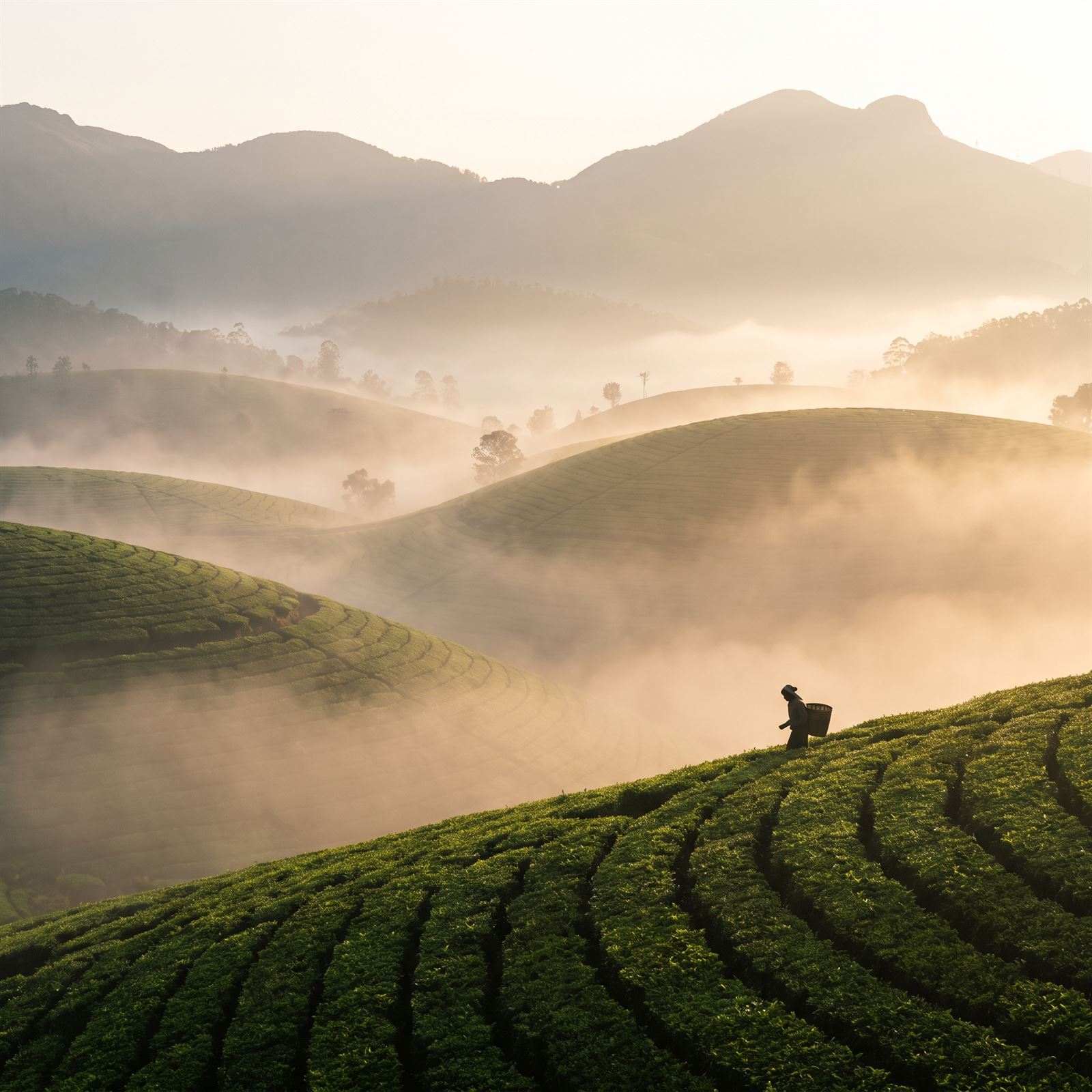
Munnar keeps photographers’ hours. Stand at a viewpoint at first light and you watch the valleys fill with cloud while the sun gilds the peaks above; for an hour the tea glows an almost electric green and every contour stands in relief. By late morning the light flattens, the haze builds, and the same view becomes merely pretty. The difference between the two is the alarm clock.
The hills do not perform at noon; they confide in you at dawn.
The mist behaves like a tide — pouring up the valleys before sunrise, thinning by mid-morning in the dry months, drifting back on cool afternoons. Rather than fight it, use it: half-veiled ridgelines and lone trees emerging from the white are the frames you will actually print.
Fetraco tip: Build one deliberately empty dawn into your Munnar plan. Ask your driver the evening before which viewpoint is clearest for the season, and be there twenty minutes before sunrise with a flask of estate tea.
Eravikulam, the tahr and a flower on a twelve-year clock
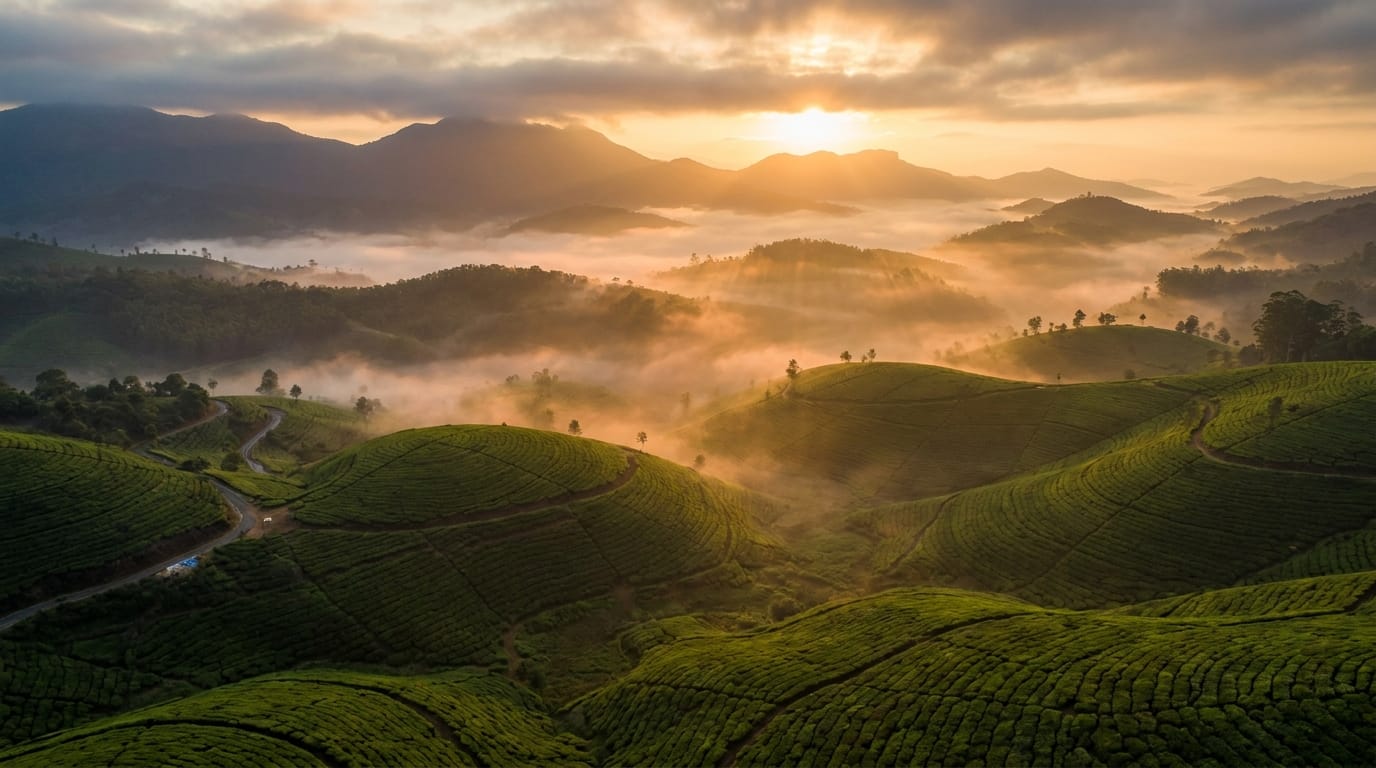
Beyond the estates, Munnar guards real wilderness. Eravikulam National Park, entered by shuttle at Rajamalai, shelters the largest surviving population of the endangered Nilgiri tahr — a mountain goat so at ease with people that it grazes within feet of the trail. Above the grasslands rises Anamudi, at 2,695 metres the highest peak in South India: these slopes are, quite literally, the roof of everything south of the Himalayas.
Then there is the Neelakurinji, the shrub that gives these mountains their old poetry. It blooms only once every twelve years, turning the slopes blue-violet for a season and drawing travellers from across the world. In ordinary years the hills keep their tea-green composure, and the tahr, the mist and the long views remain reward enough.
Fetraco tip: Entry to Eravikulam is capped and the park closes during the calving season, so never leave it to chance. We book ahead and schedule the visit for early morning, before the queues build and the light flattens.
Top Station and the Kolukkumalai idea
The classic high drive runs past Mattupetty Dam and Echo Point to Top Station on the Kerala–Tamil Nadu border, where the land falls away into a vast, cloud-filled valley — the finest sunrise viewpoint in the region. The drive itself, reservoir to forest to tea, is half the pleasure.
For the committed there is a higher idea still. Kolukkumalai, the highest tea estate in the world, is reached by a pre-dawn 4x4 climb up a track that rearranges your spine and your expectations in equal measure. At the top, sunrise breaks over a sea of cloud and a rustic estate factory still works the leaf much as it has for generations. Fetraco arranges the jeep, the timing and the factory stop; you supply the early start.
Quieter corners
Munnar town is a busy bazaar strip, and the headline viewpoints receive coach traffic by mid-morning. The remedy is simple: stay out among the estates, do the famous things early, and give your afternoons to the corners the day-trippers skip.
- Lakkam Waterfalls — a short forest walk to a cascade with a swim-worthy pool, at its best from June onward.
- Anayirankal reservoir — a calm sheet of water ringed by tea and forest, where elephants sometimes emerge at the water’s edge.
- The lanes around your stay — an unhurried hour walking between the rows, pluckers’ voices carrying across the valley, is the real Munnar souvenir.
In the monsoon the roadside cascades at Attukal and Chinnakanal thunder at their best and the crowds thin with the weather — a moodier, mistier Munnar, but a rewarding one.
What altitude does to the weather — and how to pace it
At 1,600 metres Munnar runs its own climate. From September to March, days sit between roughly 10 and 25°C under the year’s clearest skies, while evenings turn genuinely cold and mist can close a viewpoint in minutes. April and May are warmer; June to August belongs to the rain and the waterfalls. Pack a proper layer whatever the month, and treat any forecast as a suggestion.
Two nights suits first-timers: arrive from Kochi through Neriamangalam and the cardamom hills — around 110 kilometres, a slow and scenic three-and-a-half to four hours — walk an estate on day one, then give day two to Eravikulam early and the Top Station road after. A third night buys the Kolukkumalai sunrise or a slower, walking-focused stay. A fourth is pure luxury: the day you stop sightseeing and simply live at altitude.
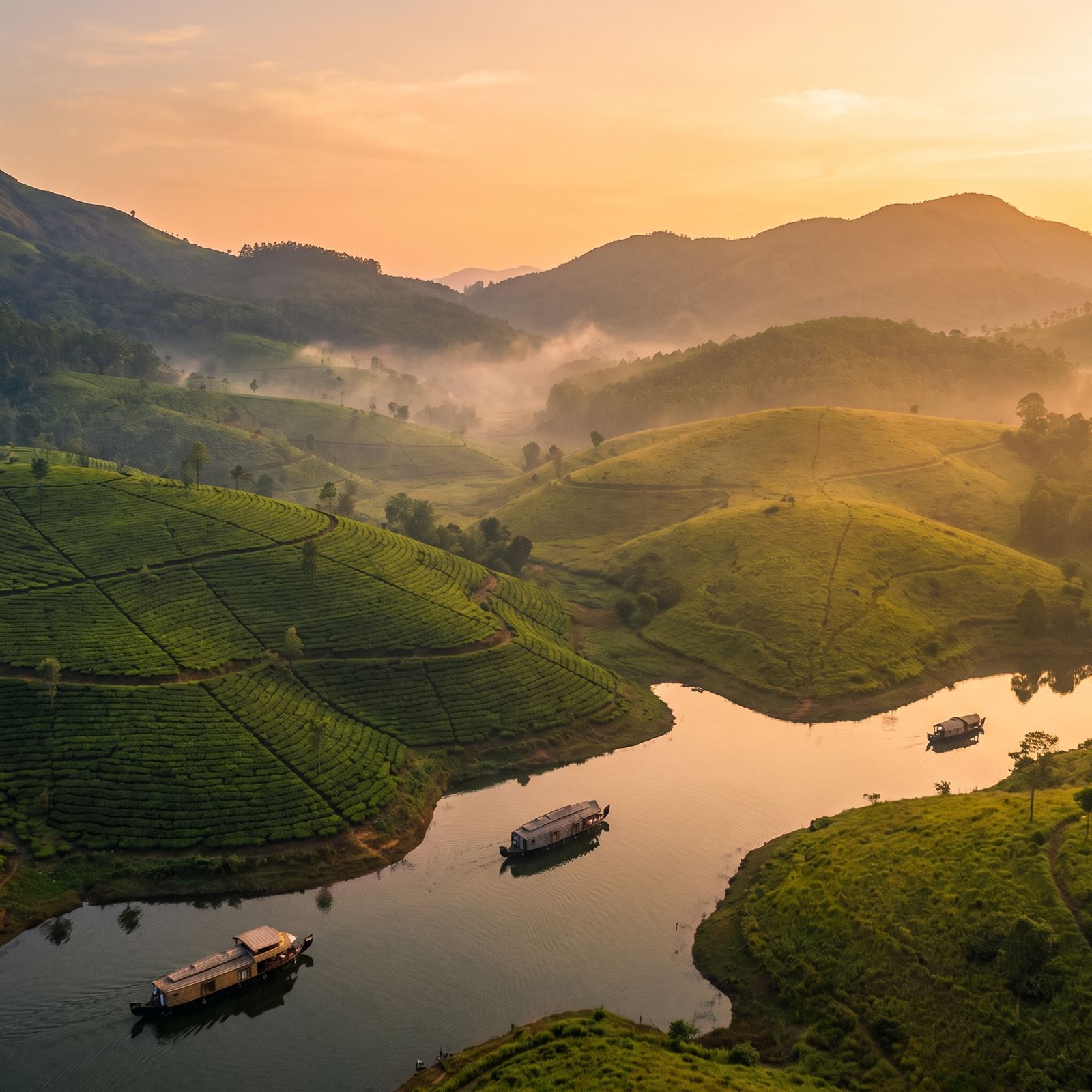
Munnar rarely travels alone. Our Simply Kerala break pairs the tea hills with the Alleppey backwaters in four easy days; the eight-day Grand Kerala journey threads Munnar between our home hills at Yendayar and Vagamon, Thekkady’s wildlife and a deluxe houseboat; and Hills, Wildlife & Beaches carries you from the plucking tables to the sands of Kovalam.
However you shape it, start the conversation early — the estate stays we love best are small and fill quickly in season. Share your dates on our planning page and we’ll sketch a tea-country itinerary around the light, the seasons and your pace, then refine it together over WhatsApp.