
A forest with no name
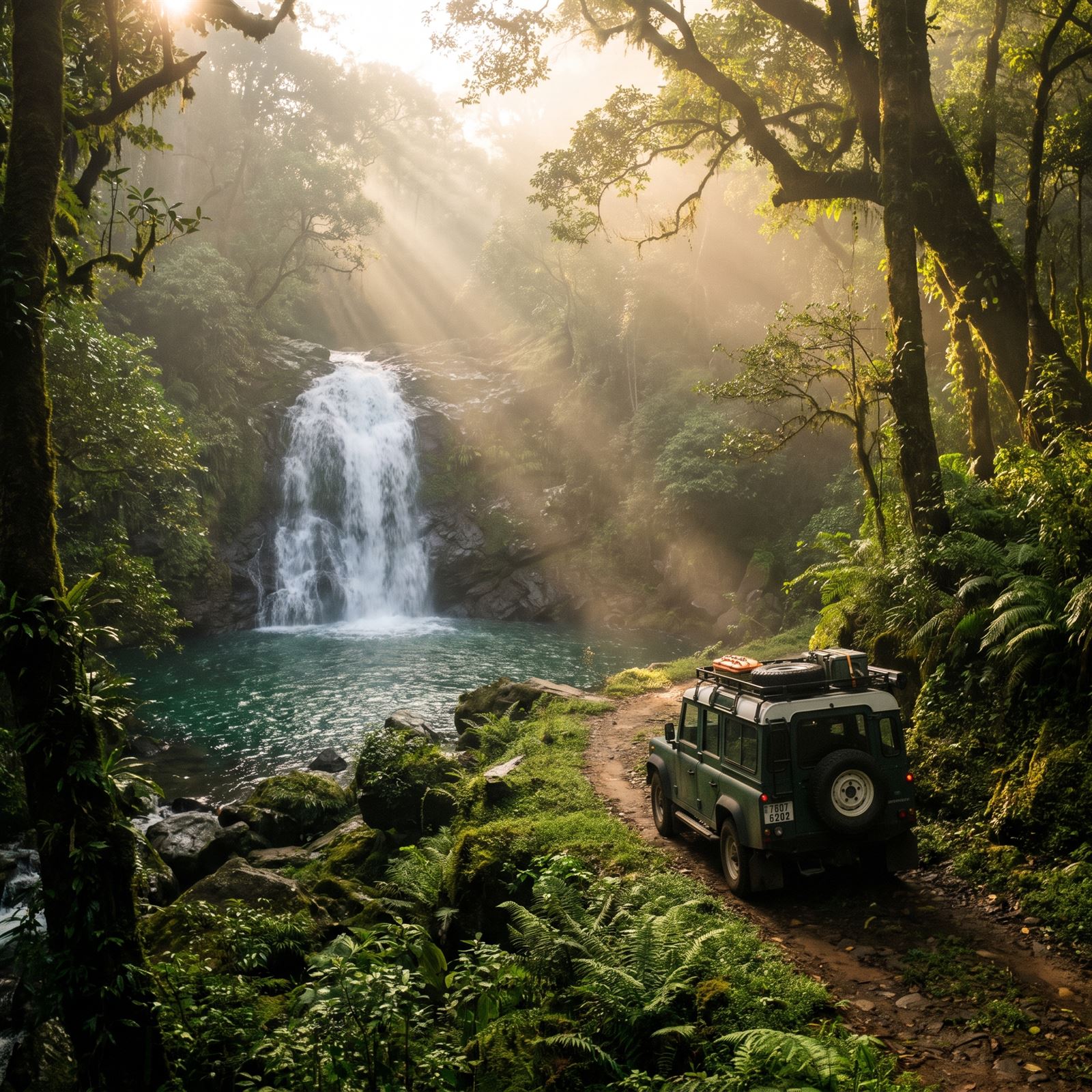
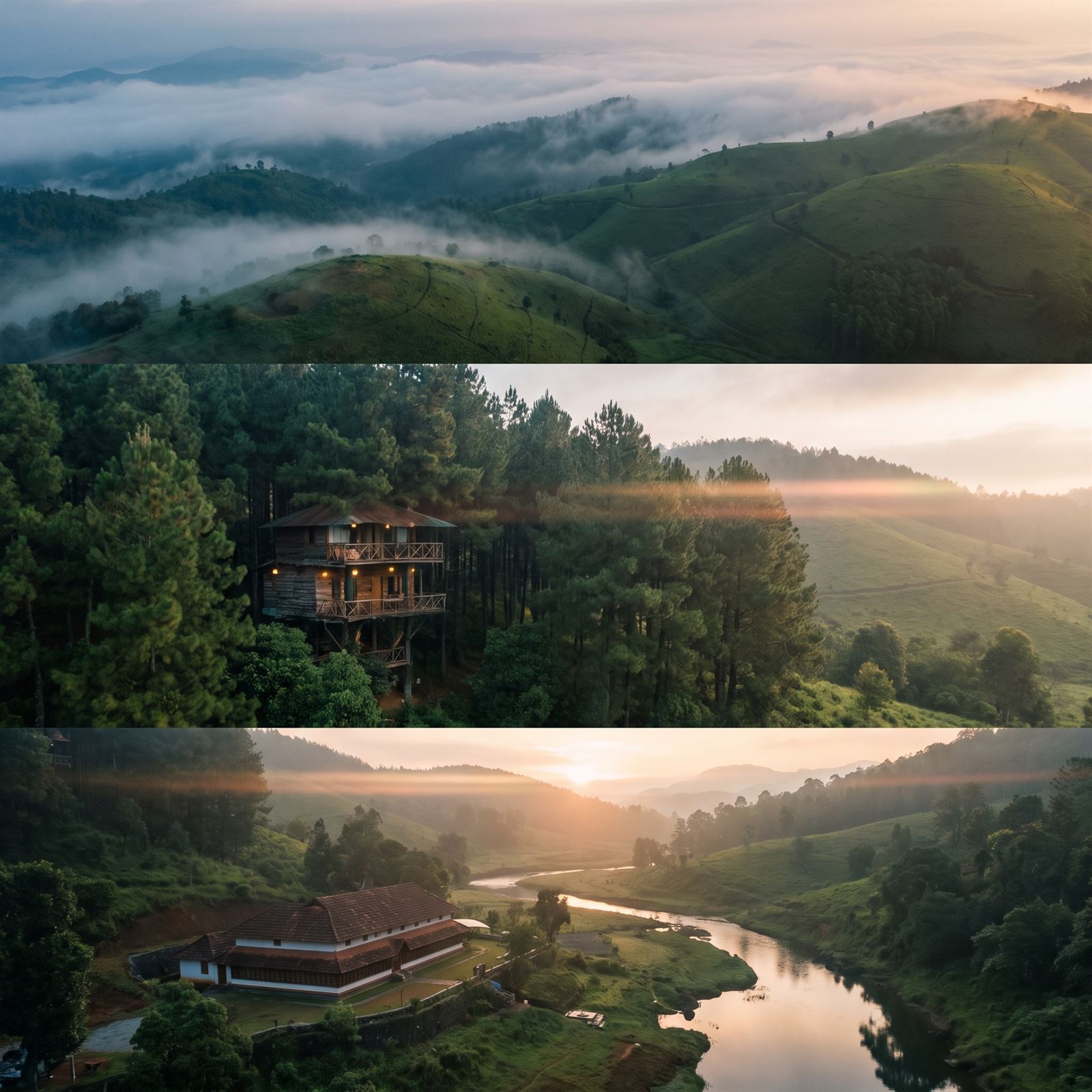
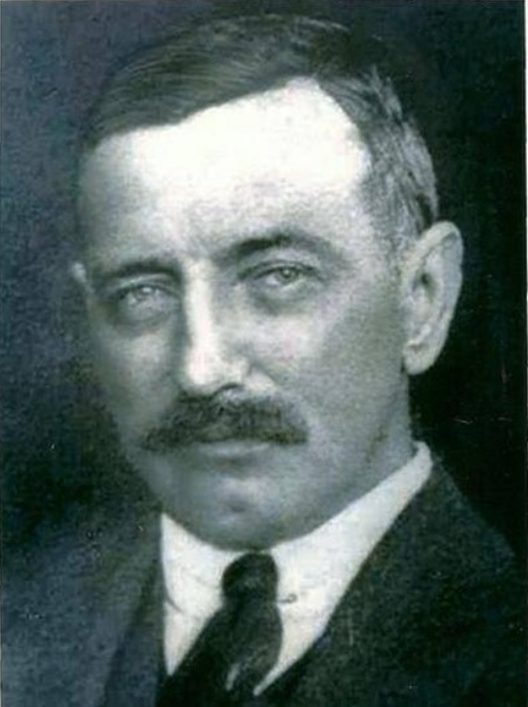
In 1904, the land our village stands on had no name and no people — dense, uninhabited forest in the Mundakayam hills, bought by a 32-year-old Irishman partly from the Travancore government and partly from the Rajas of Vanjipuzha and Poonjar. John Joseph Murphy had come a long way to stand in that forest: born in Dublin in 1872 to a family of shippers and bankers, the youngest of six, asthmatic and schooled at home, he'd left Trinity College before finishing to sail for Ceylon at twenty-one, then crossed to South India in 1897 to plant tea in the Kannan Devan hills. He built the region's first great cardamom estate at Pampadumpara before the age of thirty. And in 1902, with three partners, he did the thing that changed Kerala's economy forever: planted the first commercially successful rubber in India, at Alwaye on the Periyar.
Two years later he went out alone, into our forest. His mother had died in Ireland around the time of the purchase — and Murphy, who spoke fluent Tamil and, unlike the British planters around him, wanted his land to carry a local name, joined his grief to the river: En Thayar — "my mother." Yendayar. My mother's river. Our village has carried a son's tribute in its name for a hundred and twenty years.
The estate that fed a village
What Murphy built here became the heart of India's rubber country — rubber first, then tea from 1915 (sold under his "Stella" mark), and pepper organised on a plantation scale for the first time anywhere. When the Great Depression shuttered the big British companies, Murphy refused to close. Nearly a thousand workers from Kerala, Tamil Nadu and Karnataka worked his lands — and the way he treated them was, in the words of his contemporaries, unheard of: permanent family housing with piped water, maternity wards, crèches, a hospital, noonday meals and schooling for the children — and for the brightest of the workers' children, higher education in Madras at Murphy's own expense.
Then the war came, and with it the food shortages that starved so much of the country. The published histories record Murphy supplying quality rice to Yendayar at great personal cost. But our village's old people remember something the books don't: the cans — barley and oats, shipped from England, handed out through the estate when the rice ran thin. That detail lives nowhere but in Yendayar's memory, which is exactly where a village keeps its truest history.
He was famous beyond our hills too — the founder of the Mundakayam Club, host of the Murphy Ball that drew hundreds each Planters' Week, a racing man whose horses won across India. And a giver on a scale that reached the Vatican: churches, chapels, convents and orphanages, until Pope Pius XI conferred on him the honour Pro Ecclesia et Pontifice. There's a story still told of Murphy in Ooty, meeting nuns walking in cold rain because their convent had no vehicle — and quietly sending them a new Dodge the next day, with a driver on his payroll and the petrol bills sent to his office.
The Sayippu who stayed
Murphy visited Ireland for the last time in 1938. Then he came home — because by then, Yendayar was home. In 1952, aged eighty, he sold the estate to the Kallivayalil and Pottamkulam families and gave much of the money away. And on 9 May 1957, Murphy Sayippu died at Yendayar and was laid to rest in St Joseph's Church cemetery — the same ground where his own plantation workers lie buried. He could have been buried in Dublin among the shippers and bankers. He chose the churchyard of his workers instead. If you want to understand why this village still speaks his name with warmth, start there.The village answered in kind: the J.J. Murphy Memorial School opened in 1982 on his 25th death anniversary, the Rubber Board raised a memorial at his grave in 2013, a research centres at India's Rubber Park carries his name — and Ireland's own ambassador has stood at the tomb in our churchyard. And yet, as Kerala's newspapers have noted, the tomb itself has known seasons of neglect. We think the man who fed this village through a war deserves visitors. When our guests walk Yendayar with us, we take them there.
What the hills still remember
The planter age left its fingerprints all over our high country, and the village recorded them in its own language. Climb the old plantation trail from Yendayar toward Urumbikkara and you pass a silent colonial-era tea factory and an estate bungalow the village never bothered to name after any surname — it is simply the Sayippu Bungalow, the Englishman's. Further up lies a shallow rock pool where the planter households' ladies came to bathe: Madamkkulam, the Madamma's pool — Madamma being the Sayippu's feminine, the English lady. The men got a bungalow; the ladies got a pool; the Malayalam kept the record.Across the ridge at Kuttikkanam, the same century survives differently: Ashley Bungalow, built in 1875 by the pioneering Baker family a generation before Murphy arrived, still stands preserved above its tea gardens with its English name intact. Two bungalows, one hill country: one kept as history, one absorbed into the village's own words. And beyond our valley rises Muthukora Mala, the grassland summit overlooking four districts — the high country that frames the whole story.
Walk the history with us
This isn't a history we researched — it's the one we grew up inside. The Murphy school taught our families; the churchyard holds the Sayippu's tomb; our jeeps climb past his era's factory and bungalow on the Urumbikkara trail; the Madamma's pool is a guided walk from routes we run. If you want to walk a hundred and twenty years of Kerala's planter history with the village that lived it — a day trip or a full offbeat circuit — one WhatsApp message, and we'll take you from the river Murphy named to the pool the Madammas left behind.